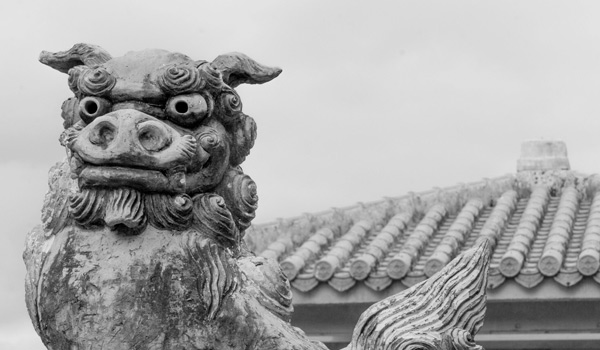
TOP » BLOG » Why Okinawan Homes Have Shisa, Red Roofs, and Stone Walls
Updated: 2026.10.20
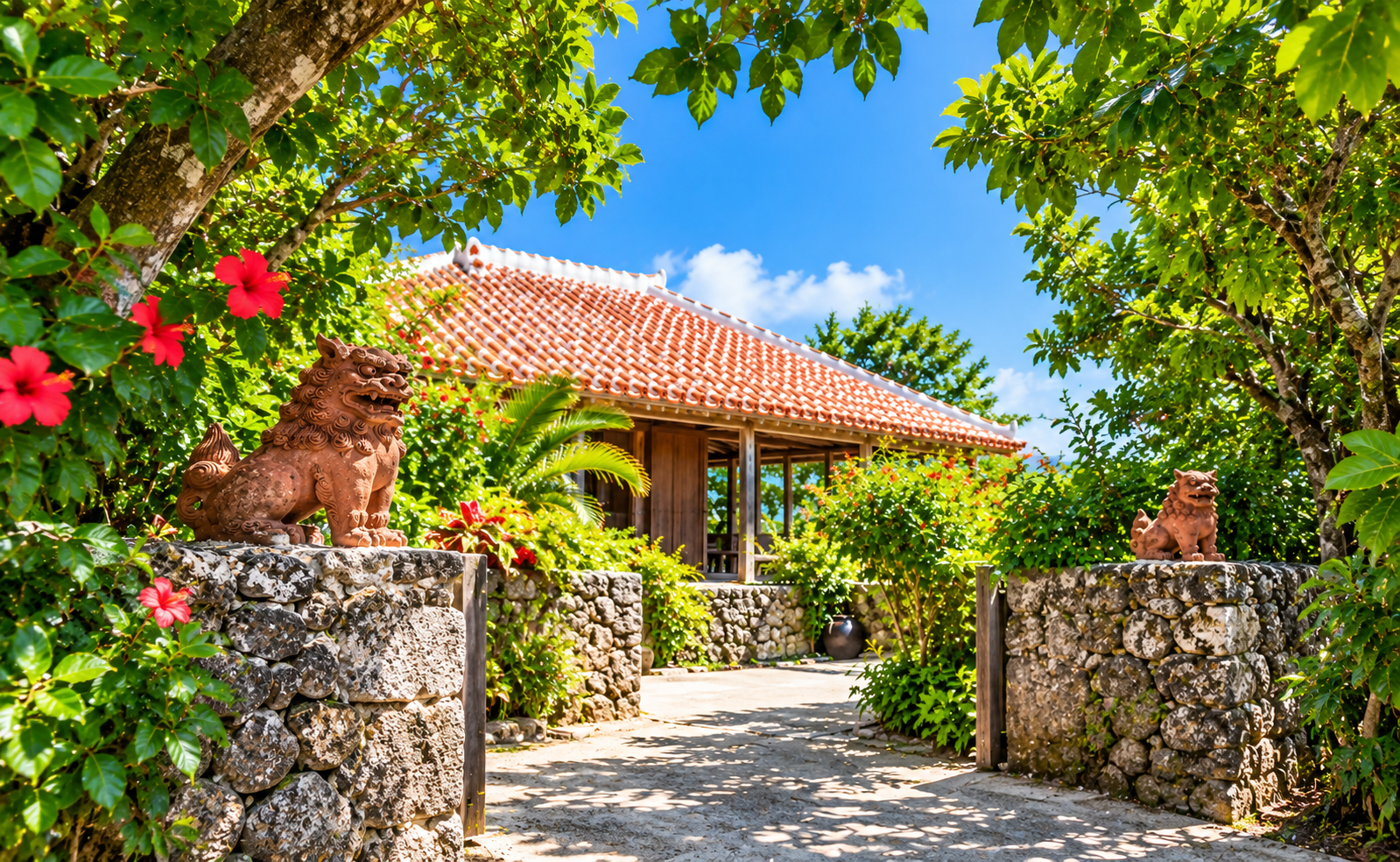
When you explore Okinawa, you may notice that traditional houses look quite different from homes in mainland Japan.
Red-tiled roofs, stone walls, tropical gardens, and small lion-like statues are some of the most recognizable features of Okinawan architecture.
But have you ever wondered why Okinawan homes look this way?
These unique designs are not just beautiful. They reflect Okinawa's history, culture, and the island's subtropical climate.
Let's explore the stories behind traditional Okinawan homes.
One of the first things you may notice when visiting Okinawa is a pair of lion-like statues standing near the entrance of a house.
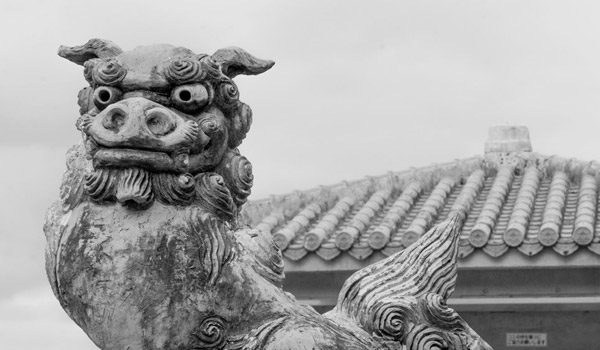
These are called Shisa, traditional Okinawan guardians believed to protect homes and families from evil spirits and bad luck.
Shisa are often displayed in pairs. Traditionally, one has an open mouth and the other has a closed mouth.
According to a common interpretation, the open-mouthed Shisa keeps evil spirits away, while the closed-mouthed Shisa keeps good fortune inside.
You can find Shisa on rooftops, at gates, in gardens, and even outside modern homes and businesses.
Today, Shisa are not only symbols of protection but also an important part of Okinawan identity.
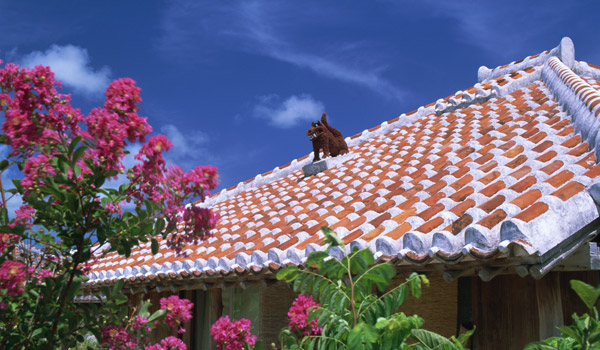
The beautiful red roofs seen throughout Okinawa are made with traditional clay tiles called Akagawara.
Their warm reddish color has become one of the most recognizable features of Okinawan architecture.
However, these roofs were designed for more than appearance.
Okinawa experiences strong typhoons, especially during the summer and autumn months.
Traditional roof tiles were secured with white plaster to help prevent them from being blown away by strong winds.
The combination of red tiles and white plaster creates the distinctive roof patterns that many visitors associate with Okinawa.
Even today, red-tiled roofs remain an important symbol of the islands' architectural heritage.

Another distinctive feature of traditional Okinawan houses is the stone wall surrounding the property.
These walls were often built using local limestone or coral limestone.
They helped protect homes and gardens from strong winds during typhoons while also providing privacy.
In some traditional villages, you can still walk along narrow streets lined with beautiful stone walls and tropical greenery.
One particularly interesting feature is the Hinpun, a short wall placed just inside the entrance of a traditional home.
The Hinpun provides privacy, reduces direct wind exposure, and traditionally was also believed to help keep evil spirits away.
It is a small architectural detail that reflects both practical design and local beliefs.
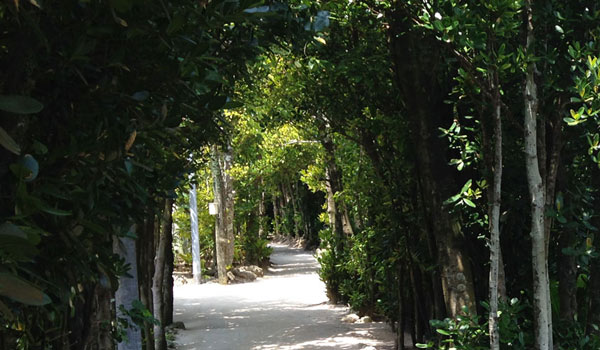
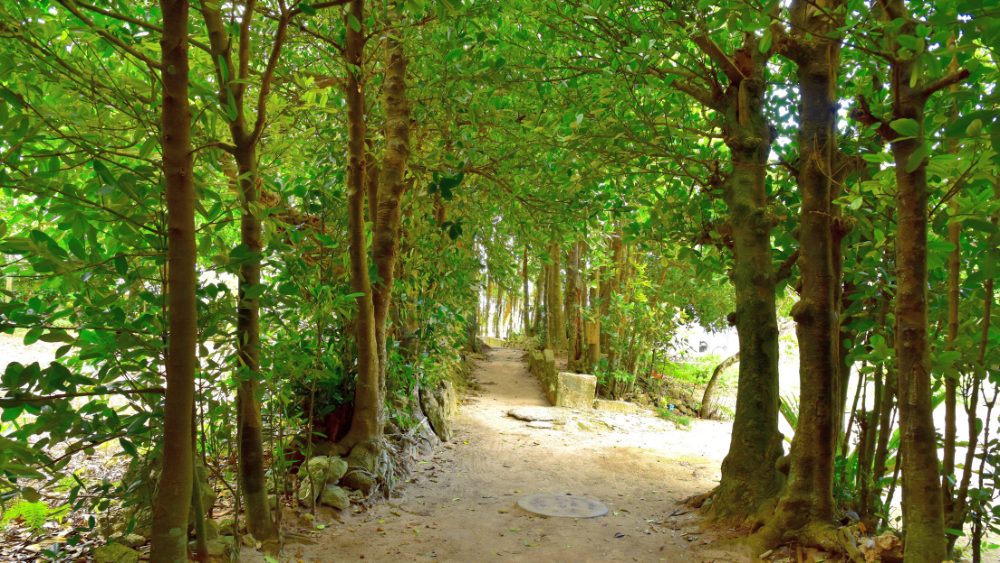
Traditional Okinawan houses were often surrounded by Fukugi trees.
These evergreen trees have thick leaves and grow close together, creating natural windbreaks.
In the past, families planted Fukugi trees around their homes to help reduce the impact of strong winds and provide shade.
One of the best places to experience this traditional landscape is Bise Fukugi Tree Road in Motobu, located in northern Okinawa near Churaumi Aquarium.
Walking through the peaceful tree-lined paths gives visitors a glimpse of what traditional village life in Okinawa may have looked like.
Traditional Okinawan homes were designed to work with the island's warm and humid climate.
Many houses featured open courtyards, wooden verandas, and wide roof eaves.
These features helped create shade, provide shelter from rain, and encourage natural airflow.
Instead of completely separating indoor and outdoor spaces, traditional Okinawan architecture often connected the home with its surrounding garden.
This relationship between nature and daily life remains one of the most appealing aspects of Okinawan residential design.
Today, many Okinawan homes are built with reinforced concrete, a common construction method on the island.
Modern houses may look very different from traditional red-roofed homes, but some still incorporate Okinawan design elements.
You may find Shisa near the entrance, Ryukyu limestone in the garden, or outdoor living spaces inspired by traditional courtyards.
Modern luxury villas and detached homes also often emphasize privacy, natural light, and connections to outdoor spaces.
Whether you prefer traditional architecture or a contemporary ocean-view villa, Okinawa offers a unique residential lifestyle shaped by its natural environment and cultural heritage.
Okinawa is more than a beautiful travel destination. It is an island with a rich history, distinctive architecture, and a lifestyle closely connected to nature.
Understanding local traditions can make exploring Okinawa's neighborhoods and homes even more enjoyable.
At VILLA REALTY, we introduce a variety of properties throughout Okinawa, including detached houses, ocean-view residences, and luxury villas.
If you are considering buying a home, vacation property, or second home in Okinawa, explore our available listings.
https://www.villa-realty.com/english/
https://www.villa-realty.com/english/property/area/northern/
VILLA REALTY
Your connection to Okinawa real estate.