TOP » BLOG » How to Read a Japanese Property Listing: A Guide for Foreign Buyers
Updated: 2026.9.11
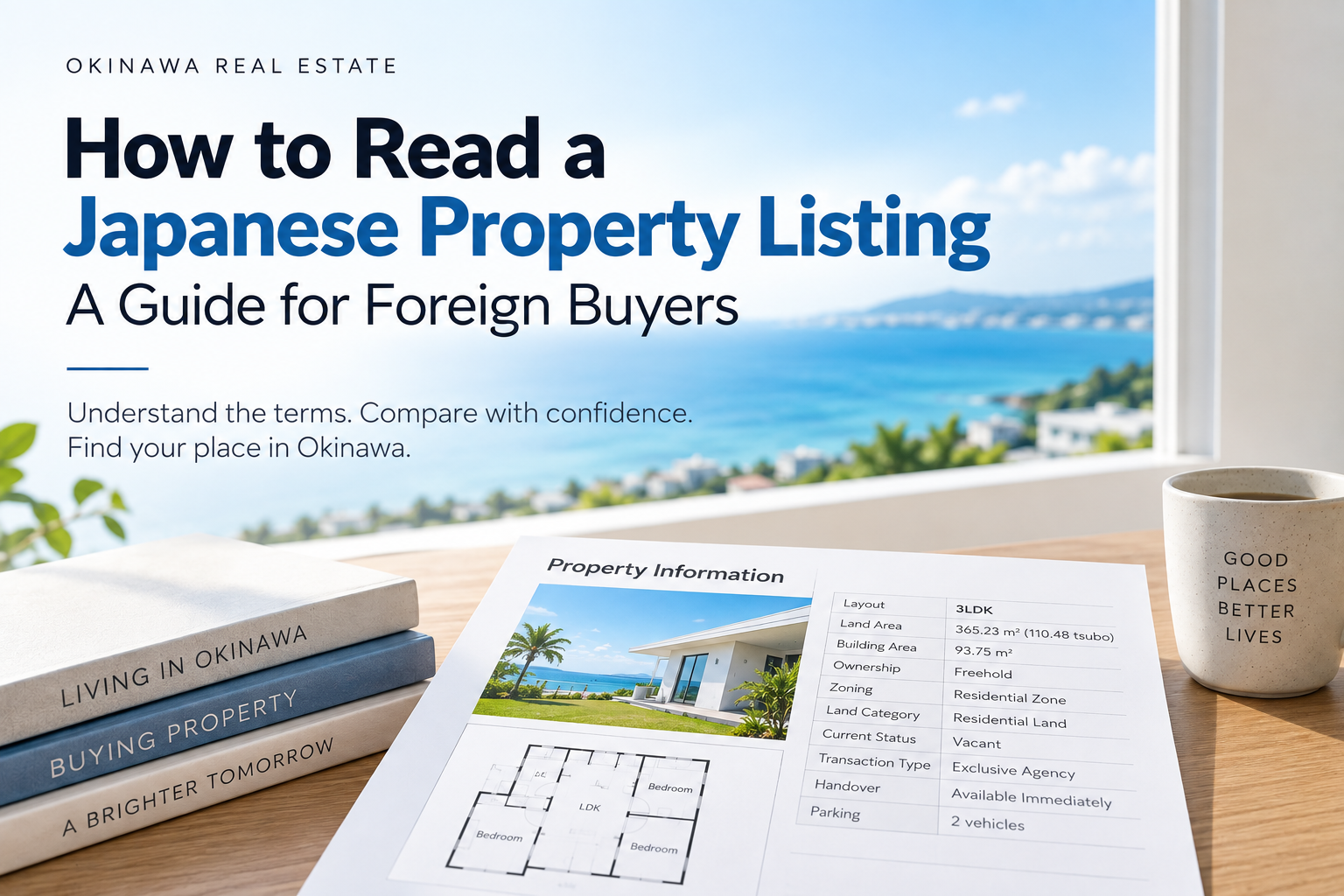
If you are looking for a home, second home, or investment property in Okinawa, you may come across terms in Japanese property listings that are unfamiliar to you.
What does 2LDK mean? What is a tsubo? What is the difference between land area and building area? And what do terms such as Freehold, Zoning, Land Category, and Transaction Type actually mean?
Understanding these terms can make it much easier to compare properties and know what to look for before making an inquiry.
Here is a simple guide to some of the most common terms you may see when searching for property in Okinawa and elsewhere in Japan.
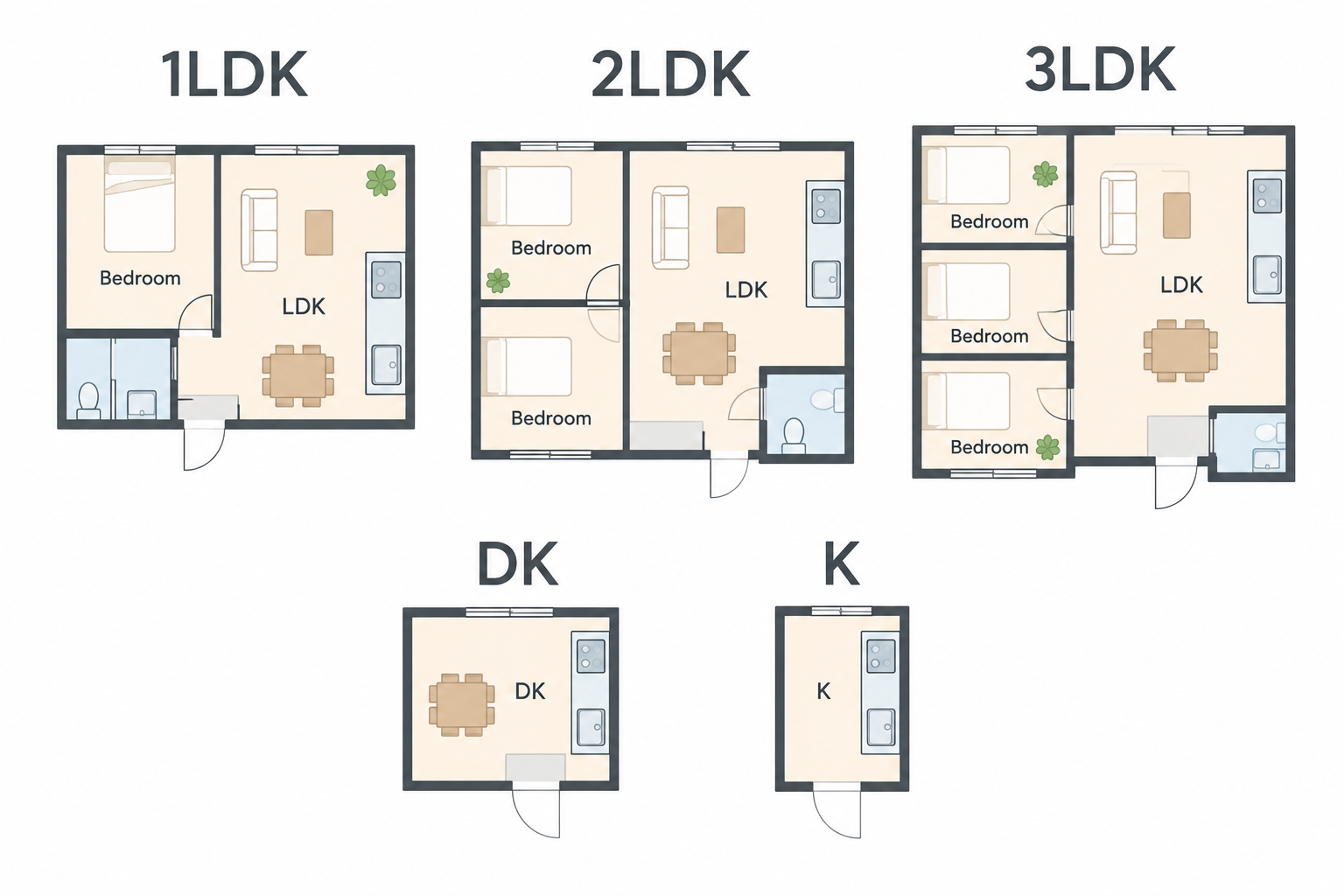
Japanese property listings commonly describe the floor plan using combinations such as:
1LDK / 2LDK / 3LDK / 4LDK
The number represents the number of separate rooms that can typically be used as bedrooms, while the letters describe the main living space.
L = Living Room
D = Dining Room
K = Kitchen
For example:
2LDK = 2 rooms + Living / Dining / Kitchen
A 3LDK has three separate rooms plus a combined living, dining, and kitchen area.
You may also see:
DK = Dining + Kitchen
K = Kitchen
Keep in mind that Japanese room sizes and layouts may differ from what you are accustomed to in your home country, so checking the actual floor plan is always important.
Property size in Japan is generally shown in square meters (m²), but you will also frequently see the traditional Japanese measurement tsubo (坪).
1 tsubo is approximately 3.3 m².
For example:
Land Area: 365.23 m² (approx. 110.48 tsubo)
Tsubo is still widely used in the Japanese real estate industry, particularly when discussing land size, building size, and price per tsubo.
For international buyers, square meters may be easier to understand, but knowing the meaning of tsubo makes Japanese property listings much easier to compare.

These are two different measurements.
Land Area refers to the total size of the land included with the property.
Building Area refers to the floor area of the building itself.
For example:
Land Area: 365.23 m²
Building Area: 93.75 m²
A property can therefore have a relatively small house on a large piece of land.
When comparing homes in Okinawa, it is useful to look at both figures rather than judging a property by the building size alone.

You may see:
Ownership: Freehold
Freehold generally indicates that the property is owned rather than held under a leasehold interest.
This is an important point to check because not every property is offered under the same type of land or ownership rights.
If you are unsure about the rights attached to a particular property, ask the real estate agent to explain the specific ownership structure before proceeding.

A Japanese property listing may include a field such as:
Zoning: Category I Residential Zone
or
Zoning: Specific Use Restriction Area
Zoning regulations determine how land can be used and what types of buildings or activities may be permitted in a particular area.
This can be especially important if you are purchasing property for something other than your own residence.
For example, buyers considering a vacation rental, accommodation facility, office, shop, or other business use should confirm whether their intended use is permitted.
Never assume that a property can be used for a particular business simply because the building itself appears suitable.

Another term you may see is:
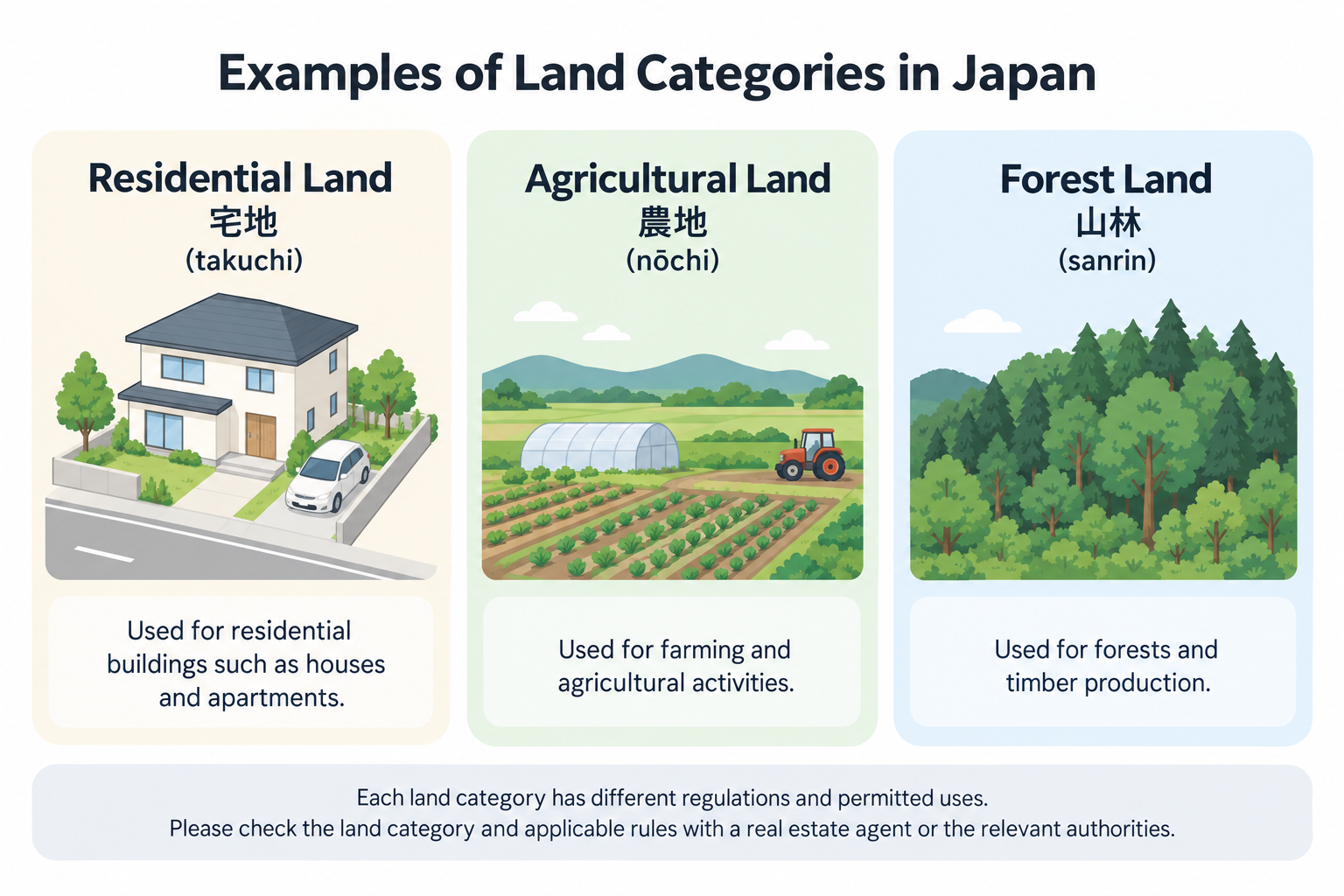
Land Category: Residential Land
Japan has legally registered land categories that describe the designated type of land.
For a typical residential property, you will often see the category listed as Residential Land (宅地 / takuchi).
Other land categories exist, including agricultural land and forest land, and different rules may apply depending on the property.
The Current Status tells you how the property is currently being used or occupied.
Common examples include:
Vacant
Owner-occupied
Tenant-occupied
A tenant-occupied property, for example, may be sold while an existing tenant is still living there.
This can be particularly important when purchasing an investment property, as the occupancy status may affect when and how the buyer can use the property.

You may see terms such as:
Available Immediately
or a specific date or period for handover.
This indicates when the property can generally be transferred or made available to the buyer.
However, the actual timing may depend on the sales contract, the seller's circumstances, financing, registration procedures, and other conditions.
If you have a specific move-in or investment schedule, confirm the expected handover date before making a decision.

Japanese listings often include a Transaction Type.
This describes the role of the real estate company in the transaction.
Depending on the property, the company may be acting as the seller, an agent, or a broker representing one of the parties.
For example, you may see:
Transaction Type: Exclusive Agency
The exact meaning and legal structure of brokerage arrangements in Japan may differ from those in your home country.
If you are unfamiliar with the transaction type shown on a listing, ask the real estate company to explain its role in the sale.

Parking is an important consideration when looking for property in Okinawa.
A listing may state:
Parking: 2 vehicles
or
Parking: 3 vehicles
However, the number alone does not always tell the whole story.
Vehicle size, parking layout, access from the road, and whether cars must be parked in tandem can all make a difference.
If you own a large vehicle or expect multiple guests, checking the actual parking space is recommended.

Family homes may include information such as:
School District: Chinen Elementary School / Chinen Junior High School
In Japan, public elementary and junior high schools are generally assigned according to the property's location.
Families with children should confirm the applicable school district with the relevant local authorities, particularly before purchasing a property based on school access.
Understanding the listing is only the first step.
Before purchasing property in Okinawa, it is also important to consider factors such as the property's legal rights, zoning and building restrictions, access roads, utilities, taxes and purchasing costs, financing, property condition, and any restrictions affecting your intended use.
If you are considering using the property as a vacation rental, private villa, or accommodation business, additional licenses, approvals, and requirements may apply.
These details can vary significantly from one property to another.

Japanese property listings can seem complicated at first, especially when you encounter unfamiliar terms such as LDK, tsubo, zoning, land category, freehold, and transaction type.
Once you understand the basics, however, comparing properties becomes much easier.
We help clients explore residential properties, second homes, investment opportunities, and other real estate options throughout Okinawa.
If you find a property you are interested in or have questions about information shown in one of our listings, please feel free to contact us.
We will be happy to help you better understand the property and the purchasing process in Okinawa.
The information in this article is provided for general informational purposes only. Property conditions, regulations, licensing requirements, taxes, and transaction procedures vary depending on the individual property and buyer. Please confirm specific details with the appropriate professionals and authorities before making a real estate decision.