Updated: 2026.3.15
Okinawa has become one of the most attractive destinations in Japan for international property buyers.
With its subtropical climate, beautiful beaches, and relaxed lifestyle, the region offers a unique opportunity for those looking to buy property in Okinawa for relocation, vacation homes, or investment purposes.
In recent years, Okinawa real estate has attracted growing interest from international buyers from Taiwan, Hong Kong, Singapore, the United States, and Europe. Buyers are increasingly looking for Okinawa investment property, second homes, and vacation residences.
However, Okinawa is not just one market. The prefecture includes many different islands and regions, each with its own lifestyle, investment potential, and natural beauty.
Below is an area-by-area guide to help international buyers understand the unique appeal of each region.

Okinawa offers several advantages for international buyers considering buying property in Okinawa, Japan.
First, Japan allows foreigners to purchase property without restrictions. Unlike many Asian countries, foreigners can freely own land, houses, and condominiums.
Second, Okinawa offers a lifestyle that combines tropical nature with modern infrastructure. International schools, resorts, and tourism facilities make the region comfortable for overseas residents.
Third, the Okinawa real estate market has seen steady demand due to tourism growth, limited coastal land, and increasing international awareness.
For many buyers, Okinawa real estate represents a balance between lifestyle value and long-term asset stability.
Okinawa Main Island is the largest and most developed island in the prefecture. It is where most international buyers start their property search.
Areas such as Naha, Chatan, Yomitan, Onna Village, and Motobu are particularly popular.
The main island offers:
International airport access
Shopping centers and hospitals
International schools
Resort areas and beaches
Strong rental demand
For investors, properties near U.S. military bases can generate stable rental income through military housing leases.
For lifestyle buyers, coastal areas such as Onna Village and Motobu offer some of the most beautiful Okinawa houses for sale with ocean views.
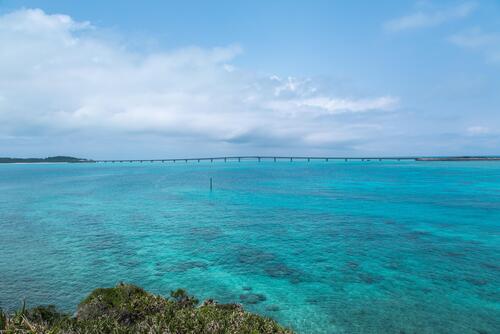
Miyako Island has become one of the fastest-growing resort destinations in Japan.
Known for its crystal-clear water and white sand beaches, Miyako attracts visitors from across Asia and Europe.
For buyers looking for:
Luxury vacation homes
Resort villas
Vacation rental properties
Miyako real estate offers strong appeal.
The opening of Miyako Airport international routes and new resort developments has also increased interest in Okinawa investment property in this area.
However, land supply is limited, and development regulations in certain coastal zones should be carefully considered.
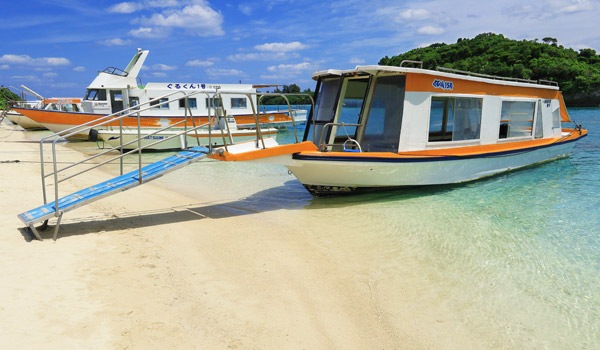
The Kerama Islands, including Zamami, Aka, and Tokashiki, are known for some of the most beautiful coral reefs in the world.
These islands are ideal for buyers seeking:
Quiet retreat properties
Eco-friendly lifestyle homes
Boutique guesthouses or diving lodges
However, the Kerama Islands are smaller and have fewer development opportunities than Okinawa Main Island.
For buyers who prioritize nature, privacy, and ocean lifestyle, the Kerama Islands offer a unique alternative to more developed resort markets.
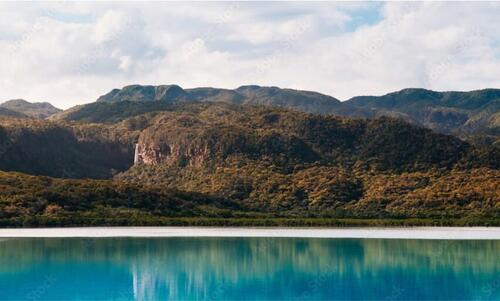
The Yaeyama Islands, including Ishigaki and Iriomote, are another major tourism destination in Okinawa.
Ishigaki Island in particular has seen increasing demand for:
Resort condominiums
Vacation homes
Tourism-related investment properties
The island has direct flights from Tokyo and other major cities, making it one of the most accessible remote islands in Okinawa.
For buyers seeking Okinawa investment property linked to tourism, Ishigaki is one of the strongest markets in the southern islands.
Smaller islands such as Izena Island and Iheya Island offer a completely different lifestyle compared to Okinawa's resort areas.
These islands are ideal for buyers looking for:
Slow island living
Cultural connection to traditional Okinawan life
Private retreats or artist residences
Because development is limited, real estate opportunities on these islands are rare but unique.
For certain buyers, especially those seeking off-grid or remote lifestyle properties, these islands represent hidden gems within the Okinawa real estate market.
The answer depends on the buyer's goals.
Areas with tourism demand or military rental markets offer stable returns.
Typical gross yields range from 3% to 6% depending on the rental strategy.
Many international buyers purchase properties in Okinawa as vacation homes for seasonal stays.
Ocean-view villas and resort condominiums are particularly popular.
Okinawa's climate, safety, and relaxed lifestyle make it attractive for retirees and remote workers.
Compared to major cities like Tokyo or Osaka, Okinawa offers a much slower pace of life and closer connection to nature.
Interest in Okinawa real estate has continued to grow due to:
Increasing international tourism
Limited beachfront land supply
Rising awareness of Okinawa as a lifestyle destination
Compared to major global resort markets, property prices in Okinawa remain relatively accessible.
For buyers seeking a second home in Japan, a lifestyle investment, or a long-term property asset, Okinawa remains one of the most attractive real estate markets in the country.
VILLA IMG specializes in assisting international buyers looking to buy property in Okinawa.
Our team supports clients from around the world with:
Property search
Purchase process guidance
International transactions
Property management services
We regularly assist buyers from Taiwan, Hong Kong, Singapore, the United States, and Europe who are searching for Okinawa real estate, vacation homes, and investment properties.
If you are considering purchasing property in Okinawa, our team would be happy to guide you through the process.
Updated: 2026.3.15

Okinawa has become an increasingly popular destination for international buyers looking for vacation homes, investment properties, or retirement residences in Japan.
Foreign investors from Taiwan, Hong Kong, Singapore, the United States, and Europe--including Germany, the United Kingdom, France, and Sweden--have shown growing interest in Okinawa real estate due to its beautiful coastline, stable property market, and relaxed lifestyle.
Below are some of the most common questions international buyers ask when considering purchasing property in Okinawa, Japan.
Yes. Foreign nationals can freely buy property in Japan, including land, houses, and condominiums.
Japan is one of the few countries in Asia where there are no legal restrictions on foreign ownership of real estate.
Foreign buyers can purchase:
Land
Detached houses
Condominiums
Vacation homes
Investment properties
You do not need Japanese residency or a visa to own property in Japan.
Foreign owners have the same property rights as Japanese citizens, meaning the property can be:
Sold
Rented
Inherited
This open policy is one of the reasons Okinawa real estate has attracted increasing attention from international buyers.
In general, it is difficult for non-resident foreigners to obtain a mortgage from Japanese banks.
Japanese banks usually require:
Permanent residency in Japan
A long-term visa
Stable income in Japan
Japanese tax records
Because of these requirements, many overseas buyers purchase property with cash.
However, financing may be possible if the buyer:
Has permanent residency in Japan
Works for a Japanese company
Has stable income in Japan
Some international investors also arrange financing through banks in their home country or private banking services.
Rental yields in Okinawa depend on the property type, location, and rental strategy.
Typical gross rental yields for houses in Okinawa are approximately:
Long-term residential rental
3% - 4%
Rental to U.S. military personnel
4% - 5%
Short-term vacation rental (where permitted)
5% - 6% or higher
Areas near beaches, resorts, and U.S. military bases tend to have stronger rental demand.
Many buyers purchase Okinawa property not only for rental income but also for long-term appreciation and personal use as a second home.
The Japanese real estate purchase process is relatively simple and transparent.
The typical timeline is 3 to 6 weeks.
Property search and selection
Submit a purchase offer
Review the Important Matters Explanation
(legal disclosure about the property)
Sign the Purchase and Sale Agreement
Pay the deposit (usually 5%-10%)
Prepare for closing
Closing and handover of the property
At closing, the remaining purchase price is paid and the property ownership is registered with the Japanese Legal Affairs Bureau.
No. It is possible to purchase property in Japan remotely.
Many international buyers complete transactions by:
Signing documents overseas
Sending notarized documents
Transferring funds via international bank transfer
However, many buyers prefer to visit Okinawa first to view properties and explore the area before purchasing.
Home inspections are less common in Japan compared to the United States.
Japanese real estate transactions include a detailed legal disclosure process, including:
Property condition disclosure by the seller
Building information
Management records (for condominiums)
Legal and zoning information
These documents help buyers understand the property's condition.
However, inspections can still be arranged, especially for:
Older houses
High-value properties
Investment properties
There are several differences between the U.S. and Japanese systems.
In the United States, escrow companies handle the transaction.
In Japan, a judicial scrivener (Shiho-Shoshi) handles the legal registration of ownership.
Japan requires a legal document called the Important Matters Explanation.
This document explains:
Property rights
Zoning restrictions
Building regulations
Legal limitations
Buyers must review this before signing the purchase contract.
U.S. transactions often take 30-60 days.
Japanese transactions are usually faster and can often be completed in 3-6 weeks.
Foreign property owners pay the same taxes as Japanese owners.
Typical annual taxes include:
Property tax (Fixed Asset Tax)
Approximately 1.4% of assessed value
City planning tax
Approximately 0.3% of assessed value
These taxes are generally lower than in many Western countries.
Yes.
Foreign owners can rent out their property through:
Long-term residential rental
Rental to U.S. military personnel
Short-term vacation rental (if permitted under local regulations)
Each rental strategy has different legal and management requirements.
Yes.
Many international buyers do not live in Japan full-time, so property management services are often used.
Typical services include:
Property maintenance coordination
Utility setup and management
Tenant communication
Rental management
Professional management allows overseas owners to manage their property remotely and efficiently.
VILLA IMG specializes in assisting international buyers purchasing real estate in Okinawa.
Our team regularly works with clients from:
Taiwan
Hong Kong
Singapore
United States
Europe
We provide full support for international buyers, including:
Property search
Purchase process guidance
Closing coordination
Property management
If you are considering purchasing property in Okinawa for investment, relocation, or a second home, we would be happy to assist you.
Updated: 2026.3. 4

Japan has become an increasingly attractive destination for foreign property buyers. Whether you are relocating to Japan, purchasing a second home, investing for rental income, or diversifying your global real estate portfolio, Japan offers a stable legal system, transparent ownership rights, and relatively predictable taxation.
However, Japan's real estate tax system has several unique characteristics that differ from many other countries.
In some countries, property taxes are primarily based on market value and fluctuate annually. In others, capital gains rules differ significantly depending on residency status. Japan's system, by contrast, relies heavily on an official "Fixed Asset Tax Assessed Value" determined by local governments. Many acquisition and annual taxes are calculated based on this assessed value--not the purchase price. This is a critical distinction that foreign buyers must understand.
Another important difference is that Japan does not restrict foreign ownership of land or buildings. There is no additional foreign buyer tax. However, tax obligations apply equally to residents and non-residents. Even if you live overseas, you are responsible for annual property taxes and may need to appoint a tax representative within Japan.
Foreign buyers typically fall into several categories:
Japan's tax system is structured and rule-based. The key to managing it effectively is understanding:
• Which tax applies
• When it applies
• What value it is calculated on (purchase price, assessed value, loan amount, or profit)
• Whether filing or withholding is required
• How residency status affects taxation
This guide provides a comprehensive overview of Japan's property-related taxes at every stage: acquisition, ownership, sale, inheritance, and cross-border considerations.
While Japan's system may appear complex at first, it is transparent and consistent once the framework is understood. With proper planning and professional advice, foreign buyers can confidently own and manage real estate in Japan.
1.TAXES WHEN BUYING PROPERTY IN JAPAN
(1) Real Estate Acquisition Tax(不動産取得税)
This is a one-time local tax imposed after purchasing real estate.
The standard rate is 4% of the assessed value. For residential land and buildings, the rate is generally reduced to 3%.
The tax is not paid at closing. Instead, the local government sends a tax notice approximately six months after purchase.
(2) Registration and License Tax(登録免許税)
This tax applies when registering ownership transfer or mortgage rights.
It is calculated based on the assessed value of the property (or the loan amount in the case of mortgages).
Typical rates are:
This tax is paid at the time of registration and is usually handled by a judicial scrivener.
(3) Stamp Duty(印紙税)
Stamp duty applies to the real estate purchase agreement. A revenue stamp must be affixed to the contract according to the transaction value.
For example:
The stamp is required at contract signing.
(4) Consumption Tax(消費税)
Consumption tax (10%) applies to the building portion of newly built properties sold by companies. Land is not subject to consumption tax.
It is included in the purchase price and paid at settlement.
|
Tax Type |
When Applied |
Tax Base |
Standard Rate |
Payment Timing |
|
Real Estate Acquisition Tax不動産取得税 |
"After purchase" |
"Fixed Asset Assessed Value" |
"3%-4%" |
"3-6 months after purchase" |
|
Registration & License Tax (Ownership Transfer)登録免許税所有権移転 |
"At registration" |
"Fixed Asset Assessed Value" |
"2.0% (1.5% temporary reduction possible)" |
"At registration" |
|
Registration & License Tax (New Building)建物新築登記 |
"At registration" |
"Fixed Asset Assessed Value" |
"0.4%" |
"At registration" |
|
Registration & License Tax (Mortgage) 抵当権設定登記 |
"At registration" |
"Loan Amount" |
"0.4%" |
"At registration" |
|
Stamp Duty 印紙税 |
"At contract signing" |
"Contract Price" |
"Tiered" |
"At signing" |
|
Consumption Tax (New build only) 消費税 |
"At settlement" |
"Building price only" |
"10%" |
"At settlement" |

2.TAXES WHILE OWNING PROPERTY
(1) Fixed Asset Tax(固定資産税)
This is Japan's primary annual property tax. It applies to owners as of January 1 each year.
The standard rate is 1.4% of the assessed value.
Key points:
Tax bills are typically paid in four installments each year.
(2) City Planning Tax(都市計画税)
Properties located in designated urban planning zones are subject to an additional tax of up to 0.3%.
It is calculated using the same assessed value as the fixed asset tax.
(3) Income Tax on Rental Income(賃貸所得税)
If the property generates rental income, income tax applies.
For individuals, progressive tax rates apply. Deductible expenses include maintenance costs, management fees, depreciation, and loan interest.
Non-residents must file an annual tax return and appoint a tax representative in Japan.
|
Tax Type |
Tax Base |
Standard Rate |
Key Notes |
Payment Timing |
|
Fixed Asset Tax 固定資産税 |
Fixed Asset Assessed Value |
1.4% |
"Small residential land may qualify for 1/6 reduction; reassessed every 3 years" |
"Usually 4 installments per year" |
|
City Planning Tax 都市計画税 |
Fixed Asset Assessed Value |
Up to 0.3% |
"Applies only in designated urban planning areas" |
"Paid together with fixed asset tax" |
|
Rental Income Tax 賃貸所得税 |
Net rental income (income minus expenses) |
Progressive rates |
"Deductions allowed (repairs |
Deductions allowed (repairs, depreciation, loan interest, etc.) Annual filing by March 15 |
3.TAXES WHEN SELLING PROPERTY
Capital Gains Tax(譲渡所得税)
When selling property at a profit, capital gains tax applies. Ownership period is determined as of January 1 of the sale year.
Rates are approximately:
These totals include income tax, resident tax, and reconstruction surtax.
Withholding Tax for Non-Resident Sellers
If a non-resident sells property, the buyer may be required to withhold approximately 10% of the sale price. This amount is credited against the final capital gains tax.
|
Tax Type |
Tax Base |
Rate |
Key Notes |
Filing Deadline |
|
Capital Gains Tax |
"Sale price - acquisition cost - selling expenses" |
"Approx. 39% (≤5 years) / Approx. 20% (>5 years)" |
"Holding period is determined as of Jan 1 of sale year" |
"March 15 of following year" |
|
Withholding Tax (Non-resident seller) |
"Total sale price" |
"Approx. 10.21% (certain cases)" |
"Buyer withholds and remits; credited against final tax" |
"At settlement" |
4.INHERITANCE AND GIFT TAX(非居住者者源泉税)
Inheritance and gift tax may apply depending on residency status and relationship to the deceased or donor.
Basic inheritance exemption:
JPY 30 million plus JPY 6 million per statutory heir
Gift tax annual exemption:
JPY 1.1 million per recipient
Taxation of worldwide assets depends on nationality and residency history. Non-residents are generally taxed only on Japanese assets.
|
Tax Type |
Tax Base |
Basic Exemption |
Key Notes |
Filing Requirement |
|
Inheritance Tax 相続税 |
"Total estate value" |
"JPY 30M + JPY 6M per heir" |
"Worldwide assets may apply depending on residency history" |
"Required if taxable" |
|
Gift Tax 贈与税 |
"Gift value" |
"JPY 1.1M per recipient annually" |
"Scope depends on donor/recipient residency status" |
"Required if exceeding exemption" |
5.IMPORTANT CONSIDERATIONS FOR OVERSEAS OWNERS
Tax Representative System
Non-residents must appoint a Tax Agent (Nozei Kanrinin納税管理人) in Japan.
The tax agent:
Failure to appoint one may result in delayed notices or penalties.
Double Taxation
Japan has tax treaties with many countries. Foreign owners may qualify for foreign tax credits or treaty exemptions.
Professional tax advice is recommended to avoid unnecessary taxation.
FINAL NOTES
Japan's property tax system is structured, predictable, and uniformly applied nationwide. By understanding acquisition taxes, annual holding taxes, and capital gains taxation, foreign property owners can confidently manage their investments.
Proper preparation--including appointing a tax representative and confirming treaty benefits--ensures smooth and compliant ownership, even while living abroad.
IMPORTANT DISCLAIMER
The information provided in this guide is based on tax laws and regulations in effect at the time of writing and reflects general examples for explanatory purposes only. Tax rates, exemptions, and procedures may change due to legislative amendments or local administrative practices.
This document does not constitute tax, legal, or accounting advice. The application of tax rules may vary depending on individual circumstances, residency status, ownership structure, and treaty applicability.
Foreign property owners are strongly advised to consult with a licensed tax accountant (Zeirishi), certified public accountant (CPA), or qualified legal professional in Japan before making any investment or filing decisions.