TOP » BLOG » Closing on a House in Okinawa: Escrow, Contracts & Legal Documents Explained
Updated: 2026.7.29
No escrow company in Japan? Here's how Okinawa real estate closings actually work -- the Explanation of Important Matters, the Sale and Purchase Agreement, and who holds your money until settlement.
If you've bought property in the United States, you know the drill: sign a purchase agreement, deposit your funds into escrow, wait through inspection and loan contingencies, and close once every condition is cleared. An independent third party -- the escrow company -- controls the process from contract to keys.
Japan has no equivalent institution. There is no escrow company standing between you and the seller. For American buyers especially, this raises an obvious question: if no neutral third party is managing the deal, what actually keeps a Japan real estate transaction safe?
The short answer: Japan protects buyers at the opposite end of the timeline. Instead of controlling the transaction after you sign, Japanese law requires that you know everything -- every legal restriction, every defect, every yen you'll owe -- before you sign. Once the contract is executed, walking away becomes difficult and often costly. The safeguard is front-loaded.
This article explains exactly how that works: the documents involved, who (if anyone) holds your money, and what to expect on closing day.
| United States | Japan | |
|---|---|---|
| How safety is ensured | Escrow (independent third party) | Disclosure before signing |
| When inspection/review happens | After contract execution | Before contract execution |
| Who manages funds | Licensed escrow/title company | Judicial scrivener or brokerage, closing day only |
| Core documents | Sale and Purchase Agreement | Explanation of Important Matters + Property Condition Report + Sale and Purchase Agreement |
| Post-contract cancellation | Possible under contingencies | Generally not permitted |
| Volume of paperwork | Moderate | Extensive (often 20-100+ pages) |
The single sentence to remember: in the U.S. you sign first and investigate after; in Japan you investigate first and sign after.
Some buyers hear that a Japanese brokerage or judicial scrivener (shiho-shoshi) "held the money" and assume this is escrow by another name. It isn't, and the distinction matters.
In a typical Okinawa closing, the buyer transfers the purchase funds to an account controlled by the judicial scrivener. The scrivener then:
That's the entire scope of the role. Unlike a U.S. escrow company, the scrivener does not evaluate whether contract conditions have been met, does not hold funds for weeks while inspections happen, and has no authority to cancel or modify the deal. The arrangement exists purely to make same-day settlement possible -- particularly useful for overseas buyers who can't be physically present. It is a closing-day convenience, not a transaction-long safeguard.
For non-resident buyers without a Japanese bank account, funds are typically remitted via international wire transfer, a service such as Wise, or in some cases directly to the scrivener's or seller's designated account. Be prepared to document the source of funds -- this is standard compliance practice, not a red flag specific to your transaction.
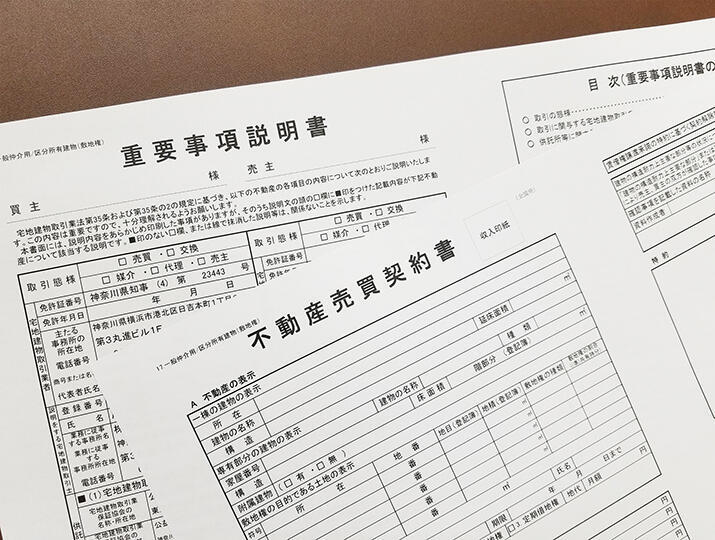
If Japan has a single document that plays the role U.S. buyers expect from inspections, title review, and disclosure forms combined, it's the Explanation of Important Matters (重要事項説明書, Jūyō Jikō Setsumeisho).
By law, this document must be:
It typically runs 20 to 100+ pages and covers nearly everything a buyer needs to make an informed decision. The major categories are:
Legal identity of the property Registered ownership, official title records, land and building boundaries, and confirmation that the buyer is purchasing what they think they're purchasing. Since land and buildings are legally separate assets in Japan, this section also clarifies whether both are included in the sale.
Zoning, access, and building restrictions What can legally be built or rebuilt, whether the land has legal road access (a rebuild may not be permitted without it), and any coverage or floor-area-ratio limits that affect renovation plans.
Mortgages and existing liens Any claims against the property that must be cleared before ownership transfers.
Physical condition Known defects, leaks, aging issues, and -- for older buildings -- whether construction was legally approved and inspected in the first place.
Utilities and infrastructure Water, sewer, gas, and electricity connections, including any private systems that carry extra maintenance costs.
Condominium-specific matters (where applicable) Common areas, shared land rights, management structure, monthly fees, reserve funds for future repairs, and any major repairs already planned or completed.
Neighborhood and disclosure items Nearby facilities, planned development, and -- a category unique to Japan -- psychological factors (心理的瑕疵), meaning disclosure of past deaths or incidents on the property that could affect a buyer's comfort or the property's resale value.
Foreign buyer-specific matters Foreign exchange reporting requirements, tax agent arrangements, and remittance considerations for non-resident owners.
Contract terms Purchase price and payment schedule, deposit (tetsukekin) conditions, cancellation terms, and any special clauses (特約条項) that differ from standard terms.
At the end, the buyer formally acknowledges that all of this was explained and understood -- the licensed agent must show their credentials as part of this process.
Practical advice: Request a draft of this document well before the scheduled contract date. Reviewing 50+ pages for the first time on signing day is not a realistic way to catch a problem. If any contract terms change afterward, the document must be reissued -- insist on that.
Property Condition Report (seller disclosure) A separate, more focused document where the seller formally discloses known defects, leaks, prior accidents, or issues. This is the seller's side of the disclosure obligation, distinct from the brokerage-prepared Explanation of Important Matters.
Sale and Purchase Agreement (SPA) The binding contract itself -- price, closing date, default and termination clauses. In Japan, once this is signed, unilateral cancellation by the buyer is generally not permitted, and a deposit of roughly 5-10% of the purchase price is paid at signing. This is the point of no return in a Japanese transaction, which is precisely why so much happens before it.
Once the Explanation of Important Matters has been delivered and the SPA signed, closing in Okinawa typically proceeds as follows:
Afterward, expect a Real Estate Acquisition Tax notice from the prefectural government, usually arriving 3-6 months after registration (calculated as roughly 3% of the assessed value -- not the purchase price). Non-resident owners must also appoint a Tax Payment Agent in Japan to handle the annual Fixed Asset Tax going forward.
(Note: property taxes in Japan are based on a government-assessed value, typically 60-70% of market price -- not the price you actually paid. This is a separate topic covered in our [Japan real estate tax guide].)
Japan's system isn't less protective than the U.S. model -- it's protective at a different point in time. There's no escrow company watching over your transaction for weeks after you sign, but there is a legally mandated, professionally explained document designed to make sure you know exactly what you're buying before you're committed to buying it.
The practical implication: do your due diligence before the contract, not after. Request the Explanation of Important Matters early, ask questions about anything unclear, and treat the signing of the Sale and Purchase Agreement as the moment your flexibility ends -- because in Japan, it largely does.
IMG/VILLA does not expect foreign buyers to navigate these documents alone. We provide English summaries, visual walkthroughs, and interpretation support at every stage of this process.
Contact Us for Direct Acquisition Solutions We also have numerous off-market properties not listed on our website. Let us know your desired conditions (area, budget, etc.) and we'll propose the most suitable listings for you.
VILLA IMG Hotline: +81-98-869-3575 Email: infovilla@villa-realty.com (Language: Japanese, English, Vietnamese)