Updated: 2026.1.14
Japan is often described as one of the easiest countries in Asia for foreigners to purchase real estate.
Legally speaking, this is true.
Foreign nationals--regardless of citizenship, residency status, or visa--may purchase land and buildings in Japan with full ownership rights. There are no nationality-based restrictions on property ownership.
However, in practice, the single most common cause of failed or delayed transactions for overseas buyers is the transfer of funds from abroad to Japan.
Unlike some countries, Japanese real estate transactions are:
・Strictly deadline-driven
・Based on same-day settlement rules
・Closely monitored by banks for anti-money-laundering (AML) compliance
As a result, even buyers with sufficient funds may face serious problems if remittance planning is not done correctly from the very beginning.
This guide focuses on the real-world mechanics of purchasing property in Japan as a non-resident, with particular emphasis on:
・Where your money must be sent
・When it must arrive
・Why some transfers fail
・Why "cash purchases" are often riskier than they appear
Yes. There are no legal restrictions.
Foreign buyers may freely acquire:
・Land
・Detached houses
・Condominiums
・Investment properties
Ownership is freehold, not leasehold.
The only formal requirement is a post-purchase notification to the Bank of Japan within 20 days. This is a reporting obligation only and does not require approval.
Important clarifications:
・Purchasing property does not grant residency or a visa
・Mortgage financing is generally difficult without Japanese permanent residency
・Most overseas buyers purchase in cash or with overseas financing
Understanding the payment flow is essential.
A typical resale property transaction proceeds as follows:
1.Property selection and negotiation
2.Submission of a Letter of Intent (LOI)
3.Seller acceptance
4.Explanation of Important Matters (statutory disclosure)
5.Execution of the Purchase Agreement and payment of earnest money
6.Remittance of the remaining balance before settlement
7.Settlement (ownership transfer, mortgage release, key handover)
The most important stages are Steps 5 and 7, both of which involve strict payment deadlines.
Earnest Money (Deposit)
・Typically 5-10% of the purchase price
・Paid at contract signing
・Generally non-refundable if the buyer cancels for personal reasons
For overseas buyers, this means:
Funds must already be received in Japan before the contract date.
Same-day international transfers are not accepted.
・Paid on the settlement date
・Must be confirmed before ownership transfer and key handover
・Same-day arrival from overseas is not possible
Failure to deliver cleared funds on settlement day can result in:
・Contract termination
・Loss of deposit
・Legal liability
If the seller has an outstanding mortgage, the property is subject to a registered mortgage lien.
In these cases:
The balance payment must be remitted directly to the bank holding the mortgage.
This is not negotiable.
The reason is simple:
The mortgage must be discharged simultaneously with the payment and ownership transfer.
・Major banks
・Internet banks
・Regional banks (very common outside Tokyo)
The buyer cannot choose an alternative account, even with the seller's consent.

Many overseas buyers assume that international bank transfers are universally possible.
In practice, this assumption is often incorrect.
Common obstacles include:
・Overseas banks refusing transfers to Japanese regional banks
・Internet banks not appearing as selectable SWIFT recipients
・Per-transfer limits below the required amount
・AML restrictions blocking real estate-related transfers
This is especially common when the recipient is:
・A regional Japanese bank
・An online-only Japanese bank
As a result, buyers may find themselves unable to send funds directly to the required settlement account, even if they have ample funds.
To address these limitations, many overseas buyers use international remittance services such as Wise.
・Funds are delivered to Japanese banks as domestic transfers
・Compatible with major, regional, and online banks
・Transparent exchange rates・Clear transaction tracking
In practice, the flow becomes:
Overseas account → Wise → Designated Japanese bank account
This often enables settlement even when direct overseas transfers are impossible.
Using Wise does not reduce compliance scrutiny.
Japanese banks will still require:
✔Clear explanation of the source of funds
✔Accurate remittance purpose (e.g., "Real Estate Purchase - Balance Payment")
✔Supporting contracts and documents
Wise is a tool, not a compliance exemption.
These rules cannot be overstated.
・Initiate remittance 5-7 business days before contract signing
・Funds must be received before the contract date
・Initiate remittance 7-10 business days before settlement
・Do not assume same-day or next-day arrival
Public holidays, time zone differences, and compliance reviews can all cause delays.
Many overseas buyers believe that paying in cash simplifies the process.
In Japan, the opposite is often true.
Amounts exceeding JPY 1,000,000 must be declared at customs
Banks will require explanation of origin upon deposit
Large cash deposits often trigger compliance reviews
Even legally imported cash may not be accepted for real estate settlement.
This is strongly discouraged.
Risks include:
・Gift tax exposure
・Suspicion of nominee arrangements
・AML concerns
・Banks refusing to recognize the funds as purchase money
Even temporary use of a third party's account can jeopardize the transaction.
Japanese real estate transactions involve:
・High transaction values
・Legal finality at settlement
・National AML enforcement
Banks, real estate agents, and judicial scriveners are all legally responsible for ensuring that:
・Funds are legitimate
・The payer is the buyer
・The transaction purpose is clear
If inconsistencies are discovered, settlement can be halted--even at the last minute.
To complete a Japanese property purchase safely:
・Confirm early whether the property has a mortgage
・Verify which bank must receive funds
・Test remittance routes before signing contracts
・Allow sufficient lead time for transfers
・Avoid cash and third-party accounts
・Work with agents experienced in foreign transactions
When properly planned, purchasing property in Japan is secure, transparent, and legally robust--even for overseas buyers.
Most problems faced by foreign buyers in Japan are not legal issues, but logistical and financial misunderstandings.
Proper remittance planning from the outset is the difference between:
・A smooth, professional transaction
・And a failed settlement with serious financial consequences
This guide is intended to ensure you experience the former.
International remittance to Japan for real estate purchases depends on many interrelated factors, and no single guide can cover all possible situations.
These factors may include, but are not limited to:
・The buyer's existing banking relationship and transaction history
・The recipient bank in Japan (major bank, regional bank, or online bank)
・The total remittance amount
・The type of property being purchased (residential, villa, investment property, etc.)
・The buyer's personal status and background
・The buyer's nationality and country of residence
(as some countries impose specific remittance restrictions or regulatory controls)
Because of these variables, not all information in this article may apply to every individual case.
In addition, regulations, compliance standards, and banking policies related to international remittance, anti-money-laundering (AML), and foreign exchange controls change frequently and may differ by country, bank, and timing.
For this reason, it is essential that buyers:
・Confirm remittance feasibility in advance with their own bank
・Verify acceptance requirements with the recipient bank in Japan
・Consult with their real estate broker and other professionals involved in the transaction
Advance confirmation is critical to avoid delays, rejected transfers, or failed settlements.
This article is intended as a general practical guide, not as a guarantee or substitute for professional, case-specific confirmation.
With proven experience in high-value transactions, VILLA Group International supports
international buyers purchasing residential, resort, and income-producing properties.
Let us support your property purchase in Japan and Vietnam with clarity and confidence.
Updated: 2026.1. 9

Introduction
When purchasing real estate in Japan, foreign buyers--especially Americans--encounter a document that has no direct equivalent in the United States:
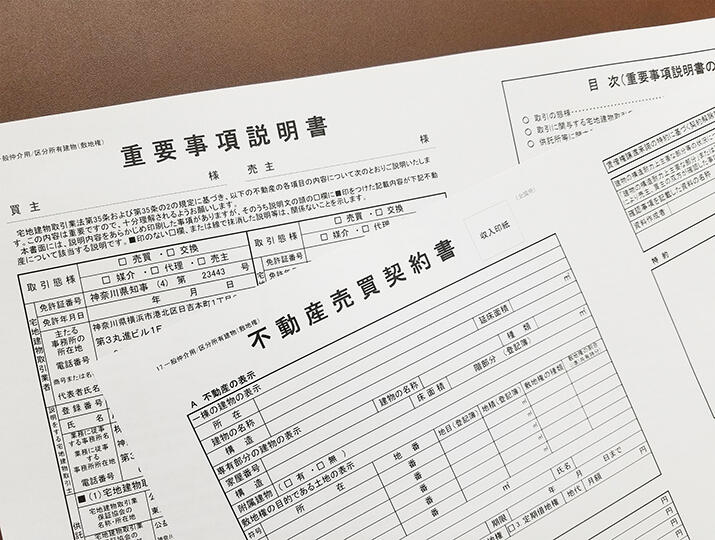
the Explanation of Important Matters (重要事項説明書, Jūyō Jikō Setsumeisho).
This document plays a role that, in some respects, overlaps with what inspections and due diligence accomplish in U.S. transactions--but it is fundamentally different in structure and timing.
Under Japanese law, buyers must receive, review, and be fully explained this document before signing a legally binding purchase contract.
The explanation is not optional and must be conducted by a nationally licensed professional.
1. What Is the Explanation of Important Matters?
The Explanation of Important Matters is a legally mandated disclosure document prepared by the seller's real estate brokerage under the Real Estate Transaction Business Act.
Its purpose is to ensure that buyers receive all material legal, physical, and regulatory information necessary to make an informed decision before entering into a binding contract.
Importantly, the investigation and explanation of this document must be carried out by a licensed Real Estate Transaction Agent, a nationally certified professional.
Key Characteristics
Detailed written document, often 20-100 pages
Must be delivered and explained verbally
Explanation must be conducted by a licensed Real Estate Transaction Agent
Must take place before execution of the Sale and Purchase Agreement
2. Why This Document Exists
In Japan, canceling a real estate contract after signing is difficult and often costly.
For this reason, Japanese law emphasizes pre-contract investigation and disclosure, rather than post-contract remedies.
The Explanation of Important Matters exists to shift all critical decision-making before commitment, not after.
Legal Philosophy
"Informed consent before commitment."
3. How This Differs from U.S. Real Estate Transactions
In the United States, inspections and due diligence are typically conducted after contract execution, during contingency periods.
Buyers may withdraw based on inspection results or financing issues.
In Japan, by contrast, these investigations and disclosures are completed before the contract is signed, through the Explanation of Important Matters.
Comparison Summary
|
United States |
Japan |
|
Sign first, investigate after |
Investigate first, sign after |
|
Multiple disclosure & inspection documents |
One comprehensive disclosure document |
|
Broad post-contract contingencies |
Limited post-contract exit |
|
Buyer-driven inspections |
Agent-driven, legally mandated disclosure |
4. What the Explanation of Important Matters Covers
The document covers many matters that U.S. buyers would normally expect to review during inspections, title review, or due diligence.
Major Categories|
Legal title and registration
Land boundaries and easements
Zoning and building restrictions
Utilities and infrastructure
Condominium management matters
Financing and contract terms
Property condition and risk factors
Environmental and neighborhood issues
5. Important Points to Confirm
Buyers should carefully confirm both property-related matters and contract-related conditions, including costs beyond the purchase price, cancellation terms, and allocation of risk.
6. Practical Advice for Foreign Buyers
Request the document in advance
Reviewing the document only on the contract day is risky. Always request a copy in advance.
Ask for a revised document if changes occur
If contract terms change, the Explanation of Important Matters must be reissued.
Sign only when fully satisfied
Once signed, withdrawal is difficult. Sign only when all explanations are fully understood.
7. Final Takeaway
The Explanation of Important Matters is the foundation of buyer protection in Japanese real estate transactions.
For American buyers, understanding this document is key to:
Avoiding misunderstandings
Making informed decisions
Entering the transaction with confidence
In Japan, the rule is simple:
Know everything first. Sign only after.
<Explanation of Important Matters Key Items for Land and Building Sale in Japan>
1. Transaction Type
取引態様(とりひきたいよう)
This item explains the role of the real estate company in the transaction.
It shows whether the company represents the seller, the buyer, or acts as an intermediary.
This is important because it affects who the agent owes duties to.
2. Purchase Price and Payment Terms
売買代金・支払条件
This section explains the total purchase price, the deposit amount, and when and how payments must be made.
It also explains how taxes and fees are settled at closing.
3. Deposit (Earnest Money)
手付金(てつけきん)
The deposit is money paid when signing the contract.
In Japan, it often works as a "cancellation deposit," meaning the buyer may cancel by forfeiting it within a limited period.
4. Contract Cancellation
契約解除(けいやくかいじょ)
This item explains under what conditions the contract can be canceled.
After signing, cancellation is limited and may involve penalties.
5. Damages and Penalties
損害賠償・違約金
This section explains the financial penalties if either party breaks the contract.
It sets limits on how much compensation may be claimed.
6. Contract Non-Conformity Liability
契約不適合責任(旧・瑕疵担保責任)
This explains whether the seller is responsible if the property does not match the contract description.
In many resale cases, the seller's responsibility is limited or excluded.
7. Property Identification (Registry Information)
物件の表示(登記情報)
This confirms the legal identity of the land and building based on official registration records.
It ensures the buyer is purchasing the correct property.
8. Ownership Rights
所有権(しょゆうけん)
This explains who legally owns the property and when ownership will transfer to the buyer.
In Japan, ownership transfers after full payment and registration.
9. Mortgages and Liens
抵当権・担保権
This shows whether there are mortgages or other claims on the property.
Any existing mortgage must usually be removed before closing.
10. Relationship Between Land and Building
土地と建物の関係
In Japan, land and buildings are legally separate assets.
This section explains whether the buyer is purchasing both or only the building.
11. Land Area and Boundaries
土地面積・境界
This explains how the land area was measured and whether boundaries with neighbors are confirmed.
Unclear boundaries may cause future problems.
12. Roads and Access
接道状況(せつどう)
This item explains whether the land is legally connected to a road.
Without proper road access, rebuilding may not be allowed.
13. Zoning (City Planning Law)
用途地域・都市計画
This explains what types of buildings and uses are allowed.
Zoning rules limit how the property can be used or rebuilt.
14. Building Restrictions
建築制限(けんぺい率・容積率など)
This shows limits on building size, height, and volume.
These rules affect renovations and rebuilding plans.
15. Other Legal Restrictions
その他の法令制限
This section lists other laws that may restrict use, such as farmland rules, disaster regulations, or scenic protection laws.
16. Land Shape and Topography
土地の形状・高低差
This explains the shape, slope, and level differences of the land.
Steep land or retaining walls may increase construction risk and cost.
17. Building Overview
建物の概要
This item explains the building's age, structure, and construction type.
Older buildings may have fewer legal protections.
18. Building Confirmation and Inspection
建築確認・検査済証
This explains whether the building was legally approved and inspected.
Missing documents may limit rebuilding or financing.
19. Building Condition
建物の状態
This describes known defects such as leaks, termites, or aging.
Buyers should review this carefully, especially for resale properties.
20. Utilities
インフラ(上下水・電気・ガス)
This explains water, sewer, gas, and electricity connections.
Private systems may require extra maintenance or cost.
21. Condominium Ownership (If Applicable)
区分所有(マンション)
This explains private units, common areas, and shared land rights.
Condominium ownership involves shared responsibilities.
22. Condominium Management
管理体制
This explains how the building is managed and who manages it.
Good management is important for long-term value.
23. Management Fees and Reserve Funds
管理費・修繕積立金
This explains monthly fees and savings for future repairs.
These are ongoing costs for condominium owners.
24. Major Repairs
大規模修繕
This explains past and planned large-scale repairs.
Unexpected repairs may require extra payments.
25. Environment and Neighborhood
周辺環境
This explains nearby facilities, noise, odors, and future development plans.
These factors affect comfort and value.
26. Psychological Factors
心理的瑕疵
This discloses deaths, accidents, or other sensitive matters.
Such factors may affect personal comfort and resale value.
27. As-Is Delivery
現状有姿引渡し
This means the buyer accepts the property in its current condition.
After closing, the seller usually has no repair obligation.
28. Handover Conditions
引渡条件
This explains when and how the property will be handed over, including vacant status and remaining items.
29. Foreign Buyer Matters
外国人買主関連事項
This covers foreign exchange reporting, tax agents, and overseas remittance issues specific to non-residents.
30. Special Clauses
特約条項
This lists any special agreements between buyer and seller that differ from standard terms.
31. Explanation by Licensed Agent
宅地建物取引士による説明
A licensed agent must explain all important matters and show their license.
This ensures legal compliance.
32. Buyer Acknowledgment
買主確認
The buyer confirms that all important matters were explained and understood before signing.
IMG Official Note to Foreign Buyers
IMG does not expect foreign buyers to understand Japanese real estate documents alone.
We provide English summaries, visual explanations, and interpretation support to help you make informed decisions.
Updated: 2026.1. 9
1. Big Picture
The fundamental difference between U.S. and Japanese real estate transactions lies in how transaction safety is ensured.
This difference explains why escrow systems and transaction documents differ between the two countries.
2. U.S. System (Escrow-Based)
In the United States, the Sale and Purchase Agreement (SPA) is the core contract, and the transaction is managed through escrow.
3. Japanese System (Disclosure-Based)
Japan does not have a comprehensive escrow system like the U.S.
Instead, Japan adopts a system where all material information must be disclosed and explained before signing the contract.
Before execution, buyers receive and review:
All disclosures are completed before contract execution.
4. Agent Receipt vs. Escrow
In Japan, judicial scriveners or brokerages may temporarily receive purchase funds at closing.
This is a practical measure to ensure safe settlement and differs from U.S. escrow in that:
5. Side-by-Side Summary
|
Item |
United States |
Japan |
|
How Transaction Safety Is Ensured |
Escrow |
Pre-contract disclosure and explanation |
|
Core Documents |
SPA (Sale and Purchase Agreement) |
Disclosure documents + Sale and Purchase Agreement |
|
Timing of Disclosure |
After contract execution |
Before contract execution |
|
Post-Contract Cancellation |
Possible, subject to conditions |
Generally not permitted |
|
Volume of Documents |
Relatively limited |
Extensive and detailed |
6. Key Message to Buyers
In Japan, it is essential that buyers fully understand and agree to all details before signing the contract.
This pre-contract disclosure system functions as Japan's alternative to escrow.
While escrow ensures transaction safety in the United States, Japan secures transaction safety through mandatory disclosure and explanation before contract execution.
Contact Us for Direct Acquisition Solutions
We also have numerous off-market properties not listed on our website. If you let us know your desired conditions (area, budget, etc.), we will propose the most suitable properties for you from our latest listings. Please feel free to contact us first!
VILLA IMG
Hotline: +81-98-869-3575
Email: infovilla@villa-realty.com
(Language: Japanese, English, Vietnamese)
Updated: 2026.1. 9
【Escrow in the United States vs. Japanい】
1. Summary Conclusion
2. U.S. Escrow System|Role of Escrow
3. Japanese Real Estate Transaction System|Legal Philosophy
4. Agent Receipt of Funds in Japan
5. Key Differences

1. Summary Conclusion
Japan does not have a comprehensive escrow system like the United States, where an independent third party manages both funds and contractual conditions throughout the transaction period.
However, in practice, real estate brokerages or judicial scriveners in Japan may temporarily receive purchase funds as an agent at closing.
This is a limited, practical arrangement to ensure safe settlement and is fundamentally different from U.S.-style escrow.
2. U.S. Escrow System
Role of Escrow
In the United States, escrow is the core mechanism of a real estate transaction.
An independent third party--such as an escrow or title company--manages funds and contractual conditions on behalf of both buyer and seller until closing.
Key Features
・Condition control: inspection, loan approval, title review, etc.
・Fund management: purchase funds are deposited into an escrow account
・Neutrality: escrow does not belong to either party
・Failure of conditions: automatic refund or contract cancellation if conditions are not met
"Escrow is the transaction itself."
Without escrow functioning properly, the transaction cannot close.
3. Japanese Real Estate Transaction System
Legal Philosophy
Japanese real estate transactions are structured under the Real Estate Transaction Business Act,
with a strong emphasis on extensive disclosure before contract execution, rather than post-contract escrow control.
Explanation of Important Matters
・Detailed explanation of the property, rights, legal restrictions, and risks before signing
・Explanation by a licensed real estate transaction agent is legally required
・Buyers are expected to fully understand and evaluate the transaction prior to contract execution
4. Agent Receipt of Funds in Japan
In some cases, real estate brokerages temporarily receive deposits or purchase funds,
mainly for practical convenience in foreign or remote transactions.
Important Notes
・No authority to control or judge contractual conditions
・Does not provide the neutral decision-making function of U.S. escrow
② The most common arrangement in Japan is temporary fund receipt by a judicial scrivener (Shiho-shoshi) at closing.
Buyer transfers funds to the scrivener's managed account
The scrivener verifies:
Authenticity of registration documents
Identity of the parties
Possibility of mortgage release
5. Key Differences
|
Item |
United States |
Japan |
|
Managing Entity |
Independent escrow company |
Real estate brokerage / Judicial scrivener |
|
Management Period |
Several weeks to several months |
Closing day only |
|
Contract Condition Management |
Yes |
No |
|
Decision on Cancellation / Refund |
Escrow institution |
Determined between the parties |
|
Legal Positioning |
Core part of the legal system |
Practical business practice |
6. Common Misunderstandings
When people say that "escrow exists in Japan," they are usually referring to agent receipt of funds.
This should not be understood as a substitute for U.S.-style escrow.
While Japan does not have a comprehensive escrow system that governs the entire transaction as in the United States,
real estate transactions in Japan may involve the temporary receipt of purchase funds by brokerages or judicial scriveners in order to ensure a safe and secure settlement at closing.
Agent receipt in Japan is a procedural safeguard at closing, not a mechanism that controls or replaces the transaction itself.
Contact Us for Direct Acquisition Solutions
We also have numerous off-market properties not listed on our website. If you let us know your desired conditions (area, budget, etc.), we will propose the most suitable properties for you from our latest listings. Please feel free to contact us first!
VILLA IMG
Hotline: +81-98-869-3575
Email: infovilla@villa-realty.com
(Language: Japanese, English, Vietnamese)
Updated: 2026.1. 9
[Real Estate Purchase Process in Japan for Foreign Buyers]
1. Eligibility Check
2. Property Search & Requirements
3. Purchase Application (Letter of Intent)
4.Price Negotiation
5.Agreement in Principle
6.Scheduling of Contract Date
7. Explanation of Important Matters (Before Contract)
8. Sale and Purchase Agreement (SPA)
9. Closing & Settlement (Same-Day Settlement)
10. Real Estate Acquisition Tax (After Purchase)
11. Remittance of Purchase Funds (Non-Resident Foreign Buyer)
12. Annual Fixed Asset Tax & Tax Agent
13. Key Message to Foreign Buyers
※What Is the Taxable Assessed Value in Japan?

1. Eligibility Check
In principle, foreign nationals may purchase land and buildings in Japan regardless of nationality or residency status.
Certain properties, such as agricultural land or restricted areas, may be subject to additional regulations.
2. Property Search & Requirements
Buyers search for properties through a real estate brokerage and clarify the intended use (residential, investment, or second home).
Working with a brokerage experienced in foreign transactions is recommended.
3. Purchase Application (Letter of Intent)
The buyer submits a Purchase Application (Letter of Intent) stating the proposed purchase price, preferred closing date, and basic conditions.
This document is non-binding and serves as the basis for negotiation.
Indicative Timeframe:1 day to several days
4.Price Negotiation
The Buyer and Seller negotiate the price and conditions, usually with broker assistance.
Indicative Timeframe: Several days to 1 week
5.Agreement in Principle
Once the Seller agrees to the main terms, an agreement in principle is reached, but no binding contract exists yet.
Indicative Timeframe: Within approximately 2 weeks from the Purchase Offer
6.Scheduling of Contract Date
After agreement in principle, the contract date is scheduled and legal documents are prepared.
Indicative Timeframe: Several days to 1 week after agreement
7. Explanation of Important Matters (Before Contract)
Before executing the Sale and Purchase Agreement, the buyer receives the legally required Explanation of Important Matters, which explains ownership, legal restrictions, utilities, management rules, and risks.
For foreign buyers, an English summary is usually provided as a reference.
8. Sale and Purchase Agreement (SPA)
The buyer signs the SPA and pays a deposit, typically 5-10% of the purchase price.
After execution, unilateral cancellation by the buyer is generally not permitted.
9. Closing & Settlement (Same-Day Settlement)
(1) Prorated Settlement at Closing
At closing, the following expenses are prorated and settled between buyer and seller:
・Fixed Asset Tax and City Planning Tax
・Electricity, water, gas (if applicable)
・For condominiums:
Proration is usually calculated on a daily basis, with the seller bearing costs up to the day before closing and the buyer from the closing date onward.
(2) Ownership Transfer Registration
A judicial scrivener(Shiho-shoshi) handles the ownership transfer registration.
Registration is filed immediately after settlement, and ownership legally transfers to the buyer.
(3) Buyer's Closing Costs (Typical Calculation)
10. Real Estate Acquisition Tax (After Purchase)
Real Estate Acquisition Tax is imposed after purchase.
Tax notices are issued by the prefectural government, usually 3-6 months after registration.
Calculation (Typical)
Tax = Assessed value × 3% (reduced rate may apply)
Filing & Payment
11. Remittance of Purchase Funds (Non-Resident Foreign Buyer)
Foreign buyers without Japanese residency, spouse visa, or Japanese bank accounts may remit funds via:
Source of funds documentation is usually required.
12. Annual Fixed Asset Tax & Tax Agent
Property owners must pay Fixed Asset Tax annually.
Non-resident owners must appoint a Tax Payment Agent in Japan to receive tax notices and make payments.
13. Key Message to Foreign Buyers
In Japan, buyers are expected to understand costs, taxes, and obligations before closing, and to prepare post-purchase tax and payment arrangements in advance.
※What Is the Taxable Assessed Value in Japan?
1. What Is the Taxable Assessed Value?
In Japan, property-related taxes are not calculated based on the purchase price.
Instead, taxes are calculated using a Taxable Assessed Value, which is determined by the local government.
The taxable assessed value is a government-assessed value used exclusively for tax purposes.
2. Fixed Asset Tax Assessed Value vs. Purchase Price
The Fixed Asset Tax Assessed Value is usually lower than the actual purchase price.
As a general reference:
Therefore, even if a property is purchased at a high price, taxes may be calculated on a lower assessed value.
3. Who Determines the Assessed Value?
The assessed value is determined by the municipal government (city, ward, or town) where the property is located.
The valuation is conducted by municipal tax authorities based on national valuation standards.
4. How Is the Assessed Value Calculated?
(1) Land
Land is assessed based on official land price standards, location, road access, zoning, and usage.
The assessment reflects standardized land values rather than individual transaction prices.
(2) Building
Buildings are assessed based on construction cost standards, structure, materials, size, age, and depreciation.
Older buildings generally have lower assessed values due to depreciation.
5. How Often Is the Assessed Value Updated?
Fixed Asset Tax Assessed Values are reviewed every three years under Japan's reassessment system.
Market fluctuations between reassessment years do not immediately affect the assessed value.
6. Relationship to Real Estate Acquisition Tax
Real Estate Acquisition Tax is calculated based on the assessed value, not the purchase price.
Tax = Assessed value × applicable tax rate
(typically 3%, subject to reductions)
7. Key Message for Foreign Buyers
In Japan, taxes are calculated based on government-assessed values, not market prices.
Understanding this system helps buyers accurately estimate taxes and avoid confusion after purchase.
Contact Us for Direct Acquisition Solutions
We also have numerous off-market properties not listed on our website. If you let us know your desired conditions (area, budget, etc.), we will propose the most suitable properties for you from our latest listings. Please feel free to contact us first!
VILLA IMG
Hotline: +81-98-869-3575
Email: infovilla@villa-realty.com
(Language: Japanese, English, Vietnamese)